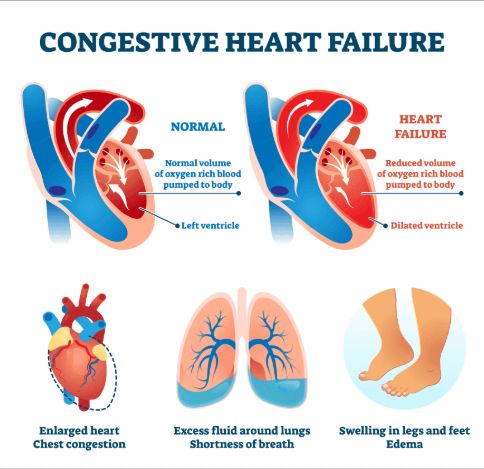
Congestive heart failure (CHF), also called heart failure, occurs when the heart cannot pump blood effectively enough to meet the body’s needs. When the heart is not functioning properly, fluid can build up in the lungs, legs, abdomen, and other parts of the body.
Heart failure can occur at any age. Risk factors include high blood pressure, diabetes, obesity, smoking, coronary artery disease, and other heart conditions. Early recognition and management of these conditions may help reduce the risk of developing or worsening heart failure.
Signs & Symptoms of CHF
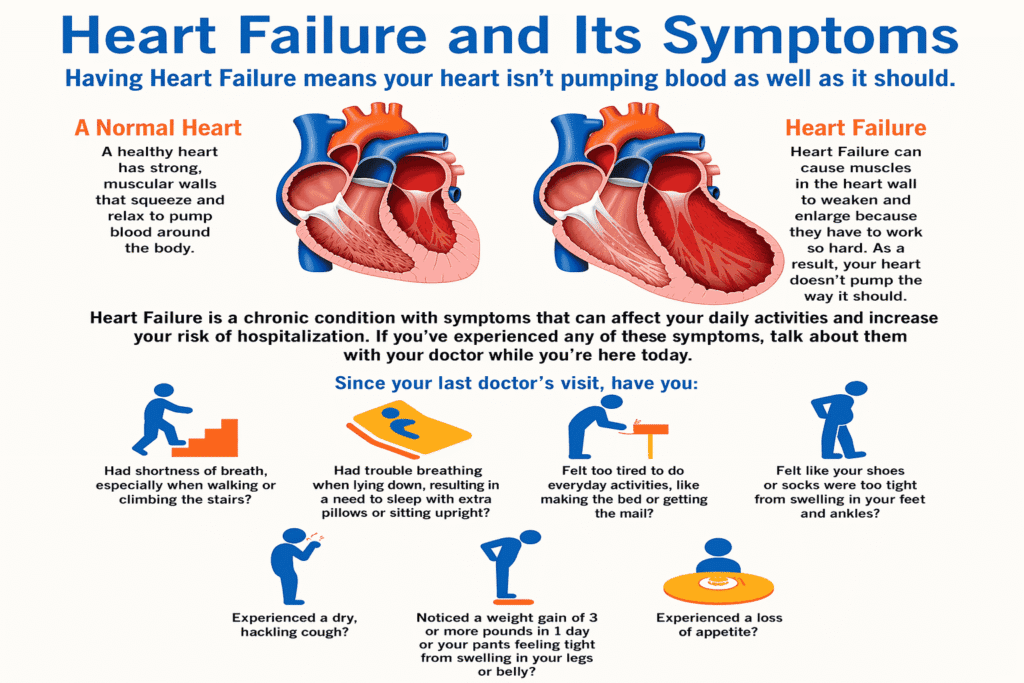
Symptoms can develop gradually or appear suddenly. Common warning signs include:
- Increasing fatigue or weakness
- Shortness of breath, especially with activity or when lying down
- Swelling of the feet, ankles, legs, or abdomen
- Sudden weight gain caused by fluid retention
- Persistent cough or wheezing
- Decreased appetite or feeling unusually full
- Difficulty performing normal activities
- Waking up at night short of breath
A pulse oximeter can help monitor oxygen levels, but oxygen saturation alone cannot diagnose heart failure. Your healthcare provider may use an echocardiogram (echo), blood tests, EKG, chest X-ray, and other testing to determine whether heart failure is present and how it should be treated.
The 4 Stages of Heart Failure
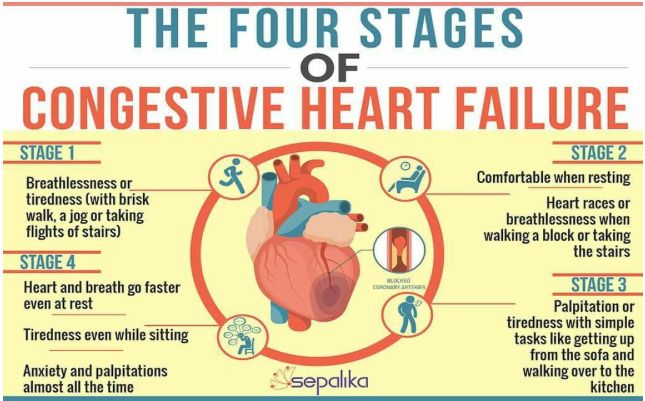
Heart failure is commonly classified into four stages: A, B, C, and D.
Stage A – At Risk: You do not have heart failure symptoms but have risk factors such as high blood pressure, diabetes, obesity, or smoking.
Stage B – Pre-Heart Failure: Changes may be present in the heart, even though you may not have symptoms. Testing such as an echocardiogram may identify these changes.
Stage C – Symptomatic Heart Failure: You have heart disease along with symptoms such as shortness of breath, fatigue, swelling, or fluid retention.
Stage D – Advanced Heart Failure: Symptoms significantly interfere with daily life despite treatment and may require specialized heart-failure care.
Your stage and treatment plan should be determined by your healthcare provider.
Managing CHF: Small Changes Matter
If you have heart failure, monitoring your condition at home can provide important information for your healthcare team.
Your provider may recommend:
- Weighing yourself regularly
- Monitoring blood pressure
- Taking medications exactly as prescribed
- Limiting sodium as instructed
- Monitoring swelling and breathing changes
- Keeping a list of medications and medical appointments
A sudden weight gain may indicate fluid retention. A commonly used warning sign is approximately 2–3 pounds in one day or 5 pounds in one week, but your healthcare provider may give you different instructions. Contact your healthcare team when you notice significant changes.
Download our Blood Pressure & Weight Log Sheet
Watch the Sodium
Sodium isn’t just found in the salt shaker. Large amounts can be found in canned soups and vegetables, processed foods, frozen meals, restaurant food, sauces, and packaged foods.
If you have been instructed to follow a low-sodium diet, learn to read nutrition labels and ask about sodium when eating away from home.
You Don’t Have to Navigate CHF Alone
A heart failure diagnosis can be overwhelming for both patients and their families. Having someone who understands healthcare and can help organize the process may make navigating that care easier.
Our Father Patient Advocacy provides nurse-led healthcare advocacy and care coordination to help patients and families navigate complex medical situations.
You remain in control of your healthcare. We help you navigate it.
Important Disclaimer
The information provided by Our Father Patient Advocacy is for general educational and informational purposes only and is not intended to diagnose, treat, cure, or prevent any disease or medical condition. Information provided by a nurse patient advocate does not replace the advice, diagnosis, or treatment of your physician or other qualified healthcare professional.
Our Father Patient Advocacy does not provide emergency medical care and does not replace your healthcare provider. Patients should contact their physician or appropriate healthcare professional regarding individual medical concerns. For severe or potentially life-threatening symptoms, seek emergency medical attention.
Any discussion, review, organization, or explanation of medical information by Our Father Patient Advocacy is intended to support healthcare navigation and patient understanding—not to establish a diagnosis or independently direct medical treatment. Our Father Patient Advocacy does not guarantee any particular medical outcome.
References:
Malik, A., Brito, D., Vaqar, S., & Chhabra, L. (2022). Congestive Heart Failure. PubMed; StatPearls Publishing. https://www.ncbi.nlm.nih.gov/books/NBK430873/#article-22661.s7
Udani, S. M., & Koyner, J. L. (2010). The Effects of Heart Failure on Renal Function. Cardiology Clinics, 28(3), 453–465. https://doi.org/10.1016/j.ccl.2010.04.004