
Polypharmacy means taking multiple medications at the same time. It is especially common among older adults and people living with multiple chronic health conditions. While medications can be essential for managing health conditions, taking several prescription drugs, over-the-counter medications, vitamins, or supplements can increase the risk of drug interactions, side effects, medication errors, falls, hospitalization, and other adverse drug events.
What Is Polypharmacy?
There is no single universally accepted definition of polypharmacy. However, taking 5 or more medications is one of the most commonly used definitions in medical research.
Polypharmacy isn’t necessarily bad. Someone with several medical conditions may legitimately need multiple medications. The concern is whether every medication is still necessary, appropriate, effective, and safe when combined with the others.
Why Is Polypharmacy a Concern?
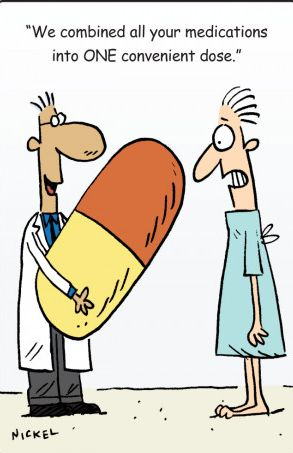
As the number of medications increases, so does the opportunity for drug-drug interactions, medication side effects, duplicate medications, and prescribing problems.
Older adults may be particularly vulnerable because aging can change how the body absorbs, processes, and eliminates medications.
Research has associated polypharmacy and potentially inappropriate medications with problems including:
- Falls and injuries
- Confusion or delirium
- Medication side effects
- Drug-drug interactions
- Hospitalization
- Functional decline
- Cognitive problems
- Adverse drug events
A systematic review of 26 reviews found the strongest and most consistent evidence connecting polypharmacy with hospitalization and inappropriate prescribing, although researchers note that the relationship between the number of medications and specific health outcomes can be complicated.
Medication Safety Matters
Medication-related harm is a significant healthcare issue in the United States. According to the CDC, more than 1.5 million people visit emergency departments each year because of adverse drug events, and nearly 500,000 require hospitalization. Adults age 65 and older account for more than 600,000 emergency department visits annually related to adverse drug events.
A systematic review and meta-analysis also found that approximately 16% of hospitalized adults age 65 and older experienced an adverse drug reaction, with commonly reported problems including fluid and electrolyte disturbances, gastrointestinal problems, kidney problems, blood-pressure disturbances, and delirium.
What Is a Medication Review?
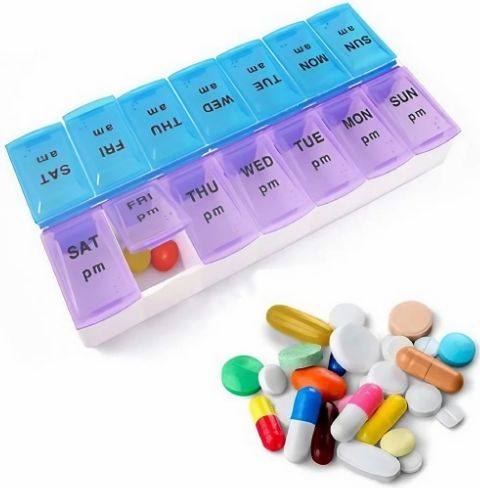
A medication review is a structured look at everything a person takes—including prescription medications, over-the-counter drugs, vitamins, herbs, and supplements.
A healthcare professional may evaluate:
- What each medication is for
- Whether it is still needed
- Dosage and timing
- Possible drug interactions
- Duplicate medications
- Side effects
- Kidney and liver considerations
- Whether medications are being taken correctly
- Whether a medication may be contributing to falls, confusion, dizziness, or other symptoms
For adults age 65 and older, clinicians may also use the American Geriatrics Society Beers Criteria to identify medications that may carry additional risks in older adults. The criteria are intended to support—not replace—individualized clinical decision-making.
How a Nurse Patient Advocate Can Help
Managing multiple medications can become overwhelming, particularly after a hospitalization, new diagnosis, surgery, rehabilitation stay, or change in healthcare providers.
A nurse patient advocate can help patients and families organize medication information, identify questions for the healthcare team, help clarify medication instructions, review available medical records, and improve communication between providers.
Medication changes should always be reviewed with the prescribing healthcare professional. Never stop or change a prescription medication on your own.
Could Your Loved One Be Taking Too Many Medications?
If your parent, spouse, or loved one takes several medications and you are concerned about polypharmacy, medication interactions, side effects, confusion, falls, or medication errors, a medication review with the appropriate healthcare professionals may be worth discussing.
You don’t have to navigate a complicated healthcare system alone. A nurse patient advocate can help you understand the process, organize information, and make sure your questions are heard. Contact Jess at ourfatherpa.org for more.
Medical Disclaimer: This article is for general educational purposes only and is not medical advice, diagnosis, or treatment. Medication decisions should be made with a qualified healthcare professional who knows the patient’s medical history. Never stop, start, or change medications without consulting the appropriate healthcare provider.
References
- Masnoon N, Shakib S, Kalisch-Ellett L, Caughey GE. What is polypharmacy? A systematic review of definitions. BMC Geriatrics. 2017;17:230. doi:10.1186/s12877-017-0621-2. PMID: 29017448.
https://pubmed.ncbi.nlm.nih.gov/29017448/ - Davies LE, Spiers G, Kingston A, Todd A, Adamson J, Hanratty B. Adverse Outcomes of Polypharmacy in Older People: Systematic Review of Reviews. Journal of the American Medical Directors Association. 2020;21(2):181-187. doi:10.1016/j.jamda.2019.10.022. PMID: 31926797.
https://pubmed.ncbi.nlm.nih.gov/31926797/ - Maher RL Jr, Hanlon J, Hajjar ER. Clinical consequences of polypharmacy in elderly. Expert Opinion on Drug Safety. 2014;13(1):57-65. doi:10.1517/14740338.2013.827660. PMID: 24073682.
https://pubmed.ncbi.nlm.nih.gov/24073682/ - Fried TR, O’Leary J, Towle V, Goldstein MK, Trentalange M, Martin DK. Health outcomes associated with polypharmacy in community-dwelling older adults: a systematic review. Journal of the American Geriatrics Society. 2014;62(12):2261-2272. doi:10.1111/jgs.13153. PMID: 25516023.
https://pubmed.ncbi.nlm.nih.gov/25516023/ - Alhawassi TM, Krass I, Bajorek BV, Pont LG. A systematic review of the prevalence and risk factors for adverse drug reactions in the elderly in the hospital setting. Clinical Interventions in Aging. 2014;9:2079-2086. doi:10.2147/CIA.S71178. PMID: 25506275.
https://pubmed.ncbi.nlm.nih.gov/25506275/ - Alhawassi TM, Krass I, Bajorek BV, Pont LG. In-hospital adverse drug reactions in older adults; prevalence, presentation and associated drugs—a systematic review and meta-analysis. Age and Ageing. 2021;50(4):1091-1098. doi:10.1093/ageing/afaa279. PMID: 33022061.
https://pubmed.ncbi.nlm.nih.gov/33022061/ - American Geriatrics Society Beers Criteria® Update Expert Panel. American Geriatrics Society 2023 updated AGS Beers Criteria® for potentially inappropriate medication use in older adults. Journal of the American Geriatrics Society. 2023;71(7):2052-2081. doi:10.1111/jgs.18372. PMID: 37139824.
https://pubmed.ncbi.nlm.nih.gov/37139824/ - Centers for Disease Control and Prevention. Medication Safety and Adverse Drug Events: Data and Statistics. CDC.
https://www.cdc.gov/medication-safety/data-research/facts-stats/index.html